Sharing Marketing Results – Goodreads, Bookfunnel, & Substack

(A video version of this post can be found at: https://www.instagram.com/p/DcpI303PNVM/)

If you’ve published a book either through the self-publishing process or through a small, indy publisher, then you know how difficult it is to make your work discoverable given that Amazon publishes nearly 10,000 books a day. I still shake my head when I consider that number. Four million books a year. It used to be a rarity to find someone who had actually achieved the goal of writing one.

The sick thing is that on one hand it’s Amazon’s fault for creating a platform from which anyone can publish a book ten seconds after they write THE END, and yet they hold the largest market share for selling books. I’ve seen stats that claim Amazon accounts for nearly 70% of eBook sales and almost half of all print copies. It’s extremely frustrating for those of us who polish and polish our work, utilize developmental editors, line editors, and proofreaders before daring to expose our work to the world. It’s getting harder to distinguish the wheat from the chaff.

Your book is now out or about to be released; you figure the hard part is now complete, only to discover the challenge of marketing that book. It’s a labyrinthine nightmare. Building platforms with a website, Facebook, Instagram, TikTok/BookTok, Substack, YouTube all the while swatting away the scores of daily emails from scammers, each with a Gmail account offering to get you recognition and sales. Success requires trial and error using ads and boosting posts, doing promotions and giveaways.

Having said that, I thought I would share some results, or the lack thereof, with a couple of programs that I thought would pan out. I am truly curious to hear back from writers if they have had any measurable success with these.

First and foremost: Goodreads. I’ve maintained an author profile on Goodreads since 2011 when I timidly published my first short story. Then in 2016 my debut novel was published. I did a Goodreads Giveaway then and got some sales and some coveted reviews. Fast forward 10 years, after a writing hiatus, and two more of my books were published. I’ve always considered Goodreads as the go-to place for all things books, the place where readers and authors would connect. I created two campaigns, one for each book, giving away 10 copies of each in print format. I was super encouraged that each book had well over 3,000 requests for the Giveaway. Reviews had already started appearing on Amazon for each and my thinking was that these two campaigns would underwrite a sales drive once the winners were announced. Goodreads maintains that they suggest to each winner that a review would be welcomed by the author – indeed! In simple math, I thought that of 6,798 requests that weren’t winners might pursue obtaining a copy from either Amazon, Barnes & Noble, Books-a-Million, or even my own website store – not all, but maybe a small percentage. The actual result? Zero sales and one review. Looking back at my author dashboard, there are 5,642 people who have the books listed as “to-read” and yet only one person seems to be doing so.

Now I get not everyone will like every book every author writes, but both books were being received well – mostly four or five stars – with a couple of awards here and there. Scratching my head, I can only surmise that the Goodreads platform, as it is today, is filled with a number of readers who use the Giveaway program to get free books. If they don’t win, they just move on to any of the other thousands of books that become available. Whatever drove them to request a copy, whether they were drawn to the cover or to the blurb describing the book wasn’t sufficient for a call to action once the Giveaway ended.

Worse still was the feeling of having egg on my face for my response to the winners. For one book, the first in a new series, I sent the book with a bookmark and a thank you note.

The other book, since it was the second in a series, I went so far as to send a free copy of the print book along with the book they won just to enhance their reading experience.

The total cost for the two programs which included printing, mailing supplies, bookmarks, thank you cards, postage (rates to Canada are horrific), and the Goodreads fees (you have to pay for a Giveaway promotion) came to $741.76. Return on Investment? Zero. The disappointment is palpable.

Another attempt at marketing was opening accounts with Bookfunnel and Substack. Bookfunnel is a platform to help independent authors and small publishers in delivering eBooks and audiobooks to readers. First you create a universal book link for each eBook title you upload. From there you can engage in promotions of which there are two basic kinds: sales promos and newsletter promos. Promos for sale are created that might include specific genre references you can join. Newsletter promos are to help in establishing and building an email list by having someone get a free copy of your book in exchange for an email address. Each kind of promo requires an entrant to post their participation at least once by linking the promo in their newsletter or blog. Hence my new account at Substack, a well-regarded platform to send posts, podcasts, and videos to your subscribers. The email addresses from your Bookfunnel promo can be loaded into Substack to grow your audience. At first, I thought this was working well. My books were being downloaded from Bookfunnel, and I was gathering a subscriber list. On the sales promos, my books were averaging 4% of the promo clicks and nearly 12% of all the views. Even if there was a percentage of a percentage of viewers who went on to purchase a copy of the book(s), I would have been happy. Sales results? Zero. Frustration #1. Over to Substack. To date, of the 57 new subscribers from my Bookfunnel promos, 14 have pulled their email off the site – that’s 25%. Frustration #2. Thankfully Bookfunnel is pretty cheap. The Mid-list Author Monthly plan only costs $20 per month.

Once again, I can only conclude that many readers jump in looking for free copies and then disappear again. That’s 61 books given away instead of 61 book sold. AND, not one review.

You may think that I’m sharing this information like sour grapes, but that wouldn’t be accurate. My hope is to accomplish two things. First, my fellow writers should be aware of what some realistic expectations might be if they haven’t so far and if you have, again, I’d sincerely like to hear from you about your experiences with Goodreads, Bookfunnel, and Substack. Second, if you are a reader and buyer of books, then please take a moment to acknowledge the work that a writer puts into their creation by offering a review, especially on Amazon since their algorithms seem to respond to verified sales and reviews – and remember it doesn’t have to be a “good” review, just a review. Negative reviews are as valuable as good ones.

I’m not giving up. I will continue to explore the benefits, and there are others, with Bookfunnel and Substack.

Give me a follow by clicking the blue button at the top right under the banner…
Fae, Fate, & Forbidden Magic

Alfheim, an award winning young adult fantasy novel, and Alfheim Resurrections, the second book of the series, are featured in a special Bookfunnel promotion for stories centering on a fae creatures and the majic that surrounds them.

The first book introduces Timothy Brennan, a seventeen year old whose life unravels by the day. He suffers from bullying, romantic rejection, and a wicked uncle. Driven to the brink of suicide, a fae creature named Aenya intervenes. They discover there is more to Timothy than anyone knew, with powers no one could have known. Still reeling from the loss of his mother, he finds her death wasn’t as it appeared along with the shock that he is heir to the confluence of two, other-worldly families. Drawn deeper into this hidden world, Timothy becomes the one chosen to restore the legendary and lost realm of Alfheim.

Alfheim Resurrections continues Timothy’s struggles as he tries to summon the inner strength to fight against the malevolence of Cadwaladr, an elf-lord, who would see him dead all the while lamenting the loss of Aenya and his newly found grandmother. But war is looming and he must find a way to uphold the promise he made to find and restore Alfheim for his people. The stakes mount as Timothy, the chosen one, still grapples to understand the world he never knew existed. Worse still, a long-dormant evil is being resurrected that threatens the centuries-long peace between the world of elves and the forces of the dark Sidhe, the Unseelie court. Destiny demands resilience and leadership…and time is running out.

The stories touch on the world of elves, fairies, and other fae creatures, Celtic and Nordic mythology, and Arthurian legend. I hope you’ll pick up copes of the books, or download them to your e-reader, and enjoy the journey.

Fantasy with a Chosen One…

Alfheim, an award winning young adult fantasy novel, and Alfheim Resurrections, the second book of the series, are featured in a special Bookfunnel promotion for stories centering on a “chosen one”.

The first book introduces Timothy Brennan, a seventeen year old whose life unravels by the day. He suffers from bullying, romantic rejection, and a wicked uncle. Driven to the brink of suicide, a fae creature named Aenya intervenes. They discover there is more to Timothy than anyone knew, with powers no one could have known. Still reeling from the loss of his mother, he finds her death wasn’t as it appeared along with the shock that he is heir to the confluence of two, other-worldly families. Drawn deeper into this hidden world, Timothy becomes the one chosen to restore the legendary and lost realm of Alfheim.

Alfheim Resurrections continues Timothy’s struggles as he tries to summon the inner strength to fight against the malevolence of Cadwaladr, an elf-lord, who would see him dead all the while lamenting the loss of Aenya and his newly found grandmother. But war is looming and he must find a way to uphold the promise he made to find and restore Alfheim for his people. The stakes mount as Timothy, the chosen one, still grapples to understand the world he never knew existed. Worse still, a long-dormant evil is being resurrected that threatens the centuries-long peace between the world of elves and the forces of the dark Sidhe, the Unseelie court. Destiny demands resilience and leadership…and time is running out.

The stories touch on the world of elves and fairies, Celtic and Nordic mythology, and Arthurian legend. I hope you’ll pick up copes of the books, or download them to your e-reader, and enjoy the journey.

To AI Or Not To AI

For the sake of transparency, I’m a 70 year old accountant who is also a writer. My extended family includes a television and film star, a Hollywood camera man, and a nephew who is developing a company using AI technology. The discussion in our family is, therefore, ongoing.

AI, once a novelty is now ubiquitous. I see it at work, in Facebook and Instagram Reels, in memes, in short…everywhere. For someone my age, it’s not hard to remember a past without it. My first job as an accountant entailed a desk with a hardline phone and an adding machine with rows and columns of numbers and a hand crank to total the input. Back then, in the late 1970s, AI was science fiction. To be honest, so were cellphones (Star Trek), Apple watches (Dick Tracy), fax machines, and personal computers.

The promise of AI, as with all new technology, is to enhance our ability to do things more cheaply and efficiently. Computers revolutionized the handling of vast amounts of data effectively reducing the number of accountants and typists needed to run a business. Cellphones made it possible to connect with anyone at any time – gone are the days of being unreachable. Fax machines and later email short-circuited snail mail. There was a general movement toward instant gratification. Recently, in a meeting at my office, someone’s laptop used AI to record the meeting and then produced a written transcript of the meeting where voice recognition technology ascribed what was being said to who said it.

I’ve heard brilliant scientists suggest that the singularity event whereby artificial intelligence surpasses human intelligence and potentially eclipses human control is not as far off as one might think, possibly between 2026 and 2045.

As a creator, an artist, I try to limit my concern with AI as to how it affects people like me and those in my family. This morning, in the news, was the segment showing how Matthew McConaughey and Michael Caine are lending their voices to the developing technology being promoted by a company called 11ElevenLabs. AI will be used to transform and copy their voice for use in media – and not just theirs. This is tempting for someone like me who’d love to have one of my novels produced in audio format with a famous voice. Can you imagine how much it would cost to hire someone like them directly – even if you could get to them? Michael Caine said he’s not looking to replace voice actors but to amplify the voices of others – writers included.

Then of course there was the recent controversy over the AI actor, Tilly Norwood. I’m sure executives in the film industry are secretly drooling over the potential cost savings by not hiring flesh and blood actors.

In either scenario – AI voices or AI actors are sure to replace the real people who rely on those sources of income while others who perform AI magic will be making money. It might be the age-old transition requiring a society to adapt to more efficient methodologies and the shifts in income that result. My concern is that media producers using AI actors and writers who use it to help them write will not have earned the product of their profession. Stephen King once said you couldn’t be a great writer until you’d written at least a million words. Writers need to hone their craft by writing, actors need to hone their craft on stage or TV or movies. Film directors need to hone their craft working on ways to create a moment without relying on AI to do it for them. In short, AI is in many ways, a cheat. How many students have already been caught using the technology in completing assignments? AI is poised to dumb us all down. Maybe being more dumb will pair with the reduction in quality for something produced with far less effort. I’m not sure this will happen, but I can’t say it won’t.

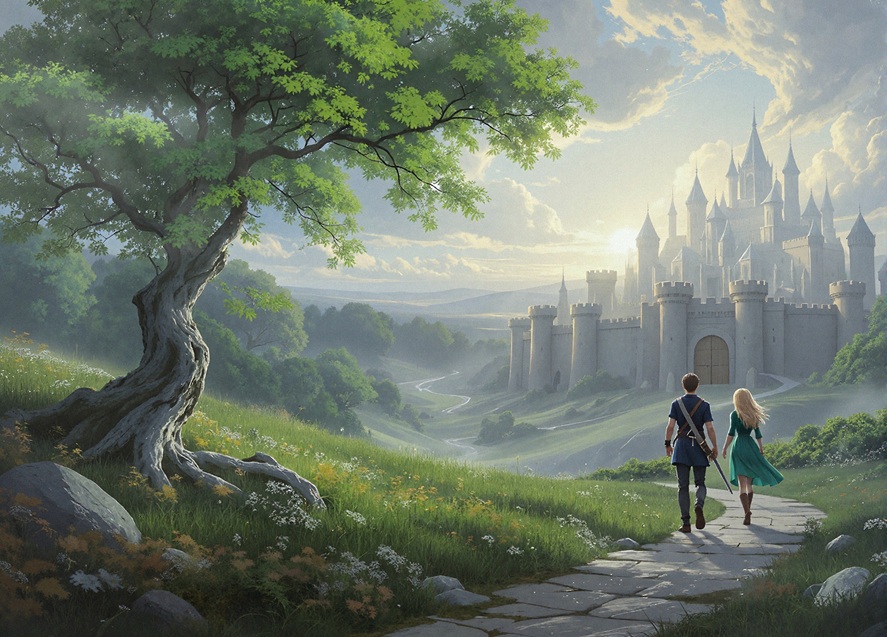
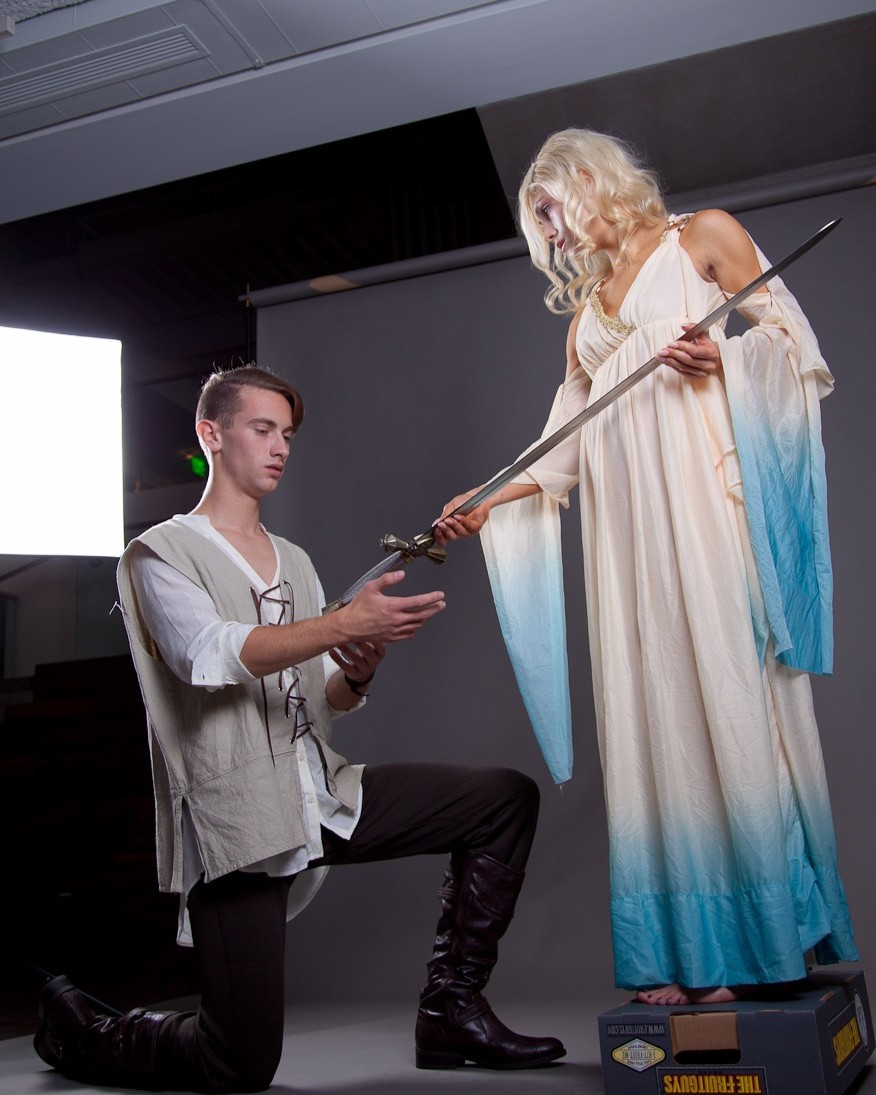
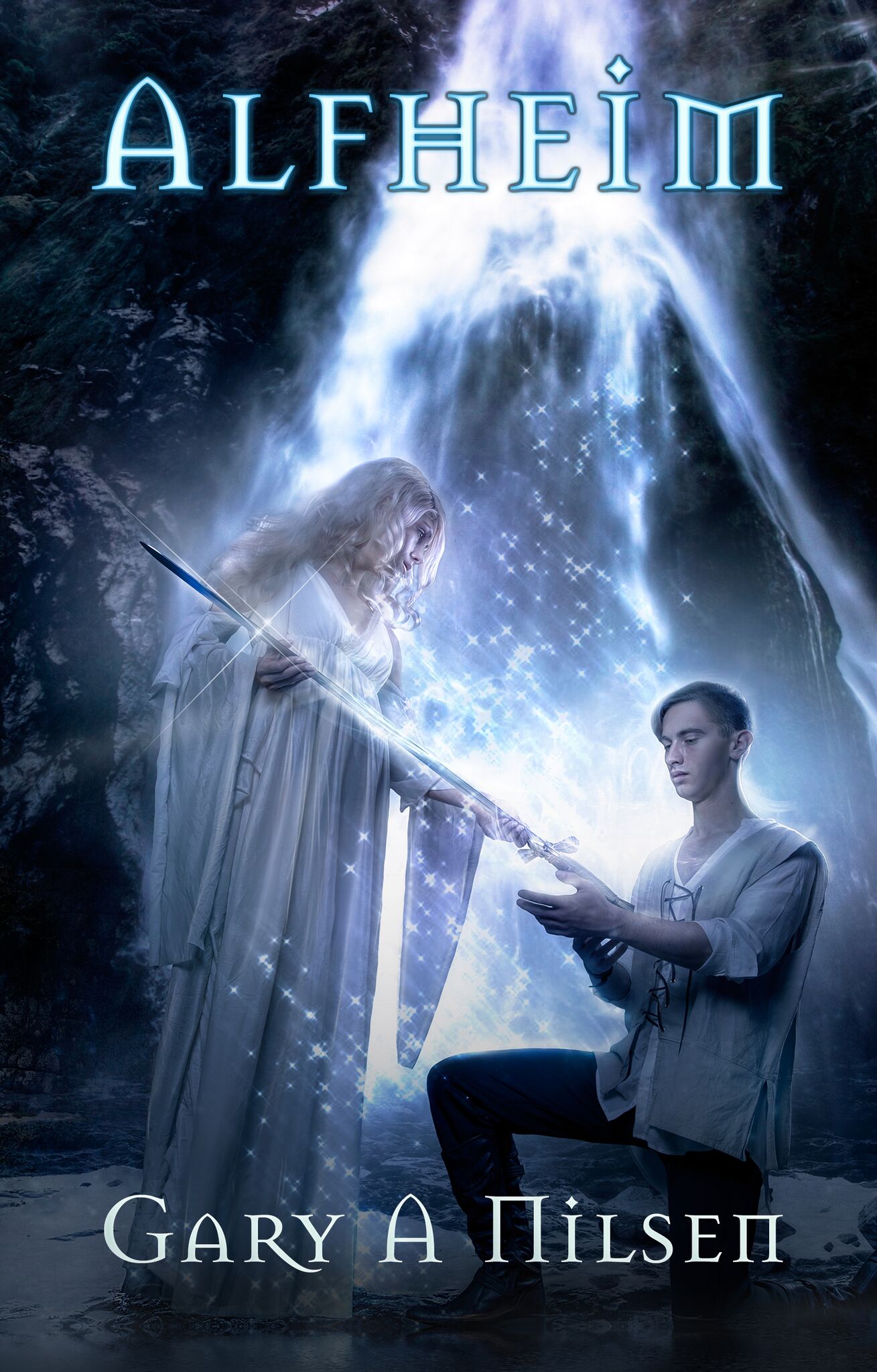
My dilemma is whether to do my best in avoiding all forms of AI for the remainder of my time on Earth, or to selectively choose any part of it. I’ll admit to being torn, and I waffle between decisions. For example, I love the idea of book trailers – they’re like the previews at the movies – it’s a great way to develop interest in having someone buy a book. Most trailers I’ve seen are awful, there is no production quality. So, do I hook up with an AI tech to create of good trailer and forego the cost of hiring acting talent, finding filming locations, editing, and postproduction to create one? For the cover of my first Novel, Alfheim, I hired two actors and a professional photographer, bought props, and engaged a graphic artist to pull it all together. Today, with a tiny amount of effort, AI could produce that cover at a fraction of the cost.

So far, I’m leaning toward the avoidance of AI. But, as I’ve learned through many life lessons, principles are expensive. In the end, will anyone care?