6 Books to Help You Become a Better Writer

(A video version of this post can be found at:  https://www.instagram.com/p/DdfB4KvBGkE/?hl=en )

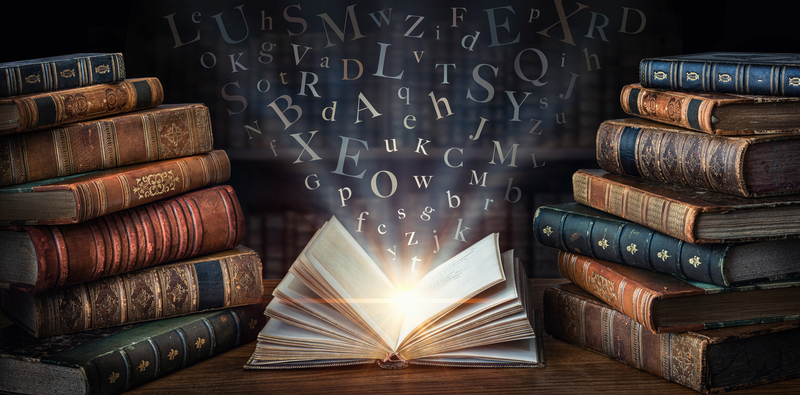
An open book emitting light surrounded by stacks of old books, with letters floating in the air.

There are significantly more indie authors out there than in years past and a common complaint you hear is that the quality of writing has diminished by the infusion of books that would otherwise fail to meet the standard of a traditionally published one. By no means should that insinuate an indie or self-published author is incapable of putting out an equally good product. But that doesn’t happen without putting in the work. Is it hard work? Yes. Does it sometimes cost a fair amount of money? It can.

But I think it’s possible to acquire certain skills to get your book to a higher level. Having said that, I wanted to recommend six books that I consider fundamental in attaining a higher level of competency as a writer.

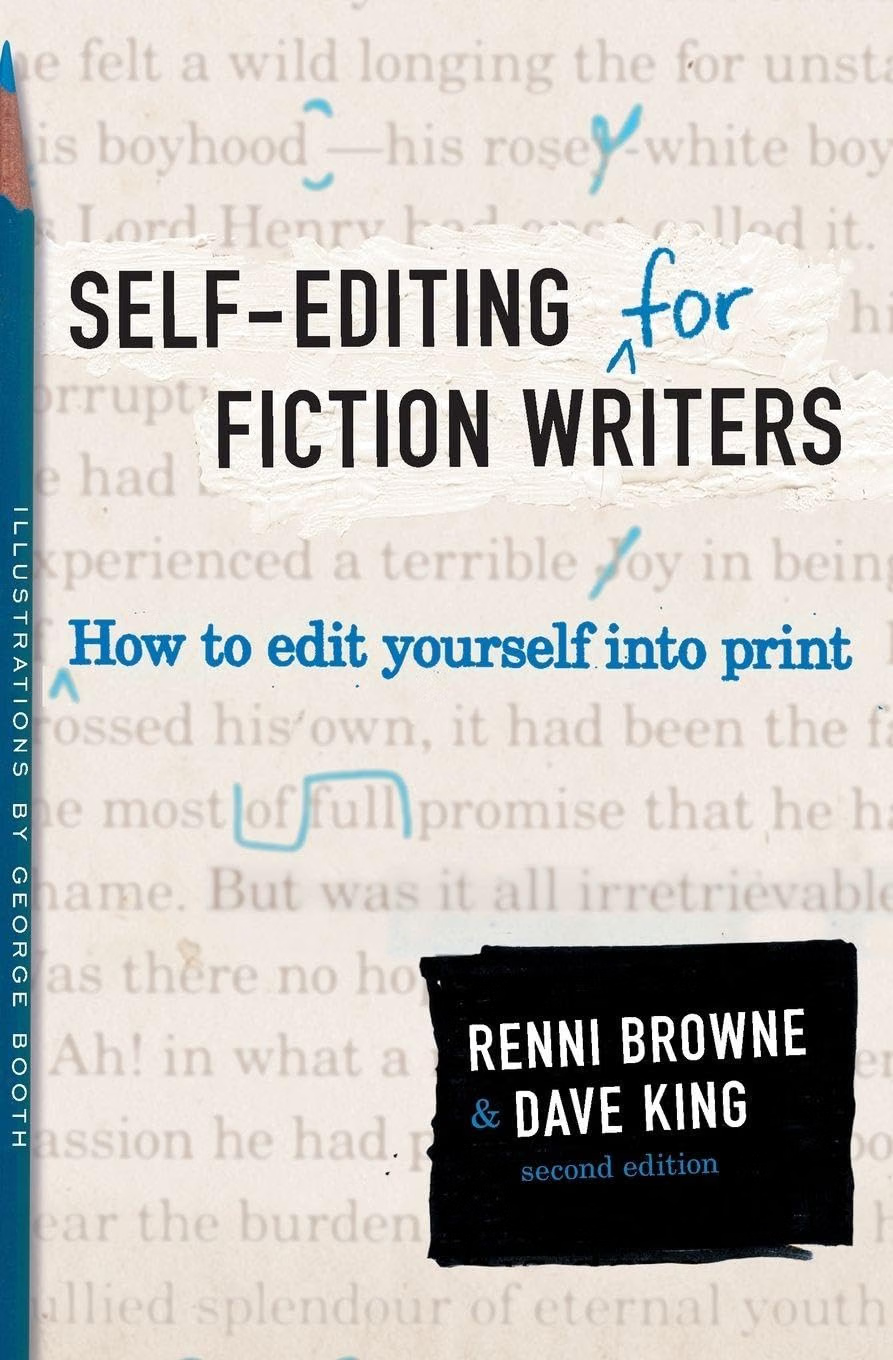
Book cover for 'Self-Editing for Fiction Writers' by Renni Browne and Dave King, featuring a colorful pencil and illustrations by George Booth.

1 – Self-Editing for Fiction Writers, by Renni Browne and Dave King. It’s available online for around $11 and is on the shelves of many bookstores in the self-help or reference section. The secondary title on the cover says: How to edit yourself into print. It covers a wealth of clues as to what will strengthen your writing by assessing your own work against the techniques they discuss. Things like show, don’t tell, point of view, dialogue, character, and pacing. By upping your game, using these filters, your reviews will be better and if you so desire to choose a path to traditional publishing, agents will regard your product in a more favorable light.

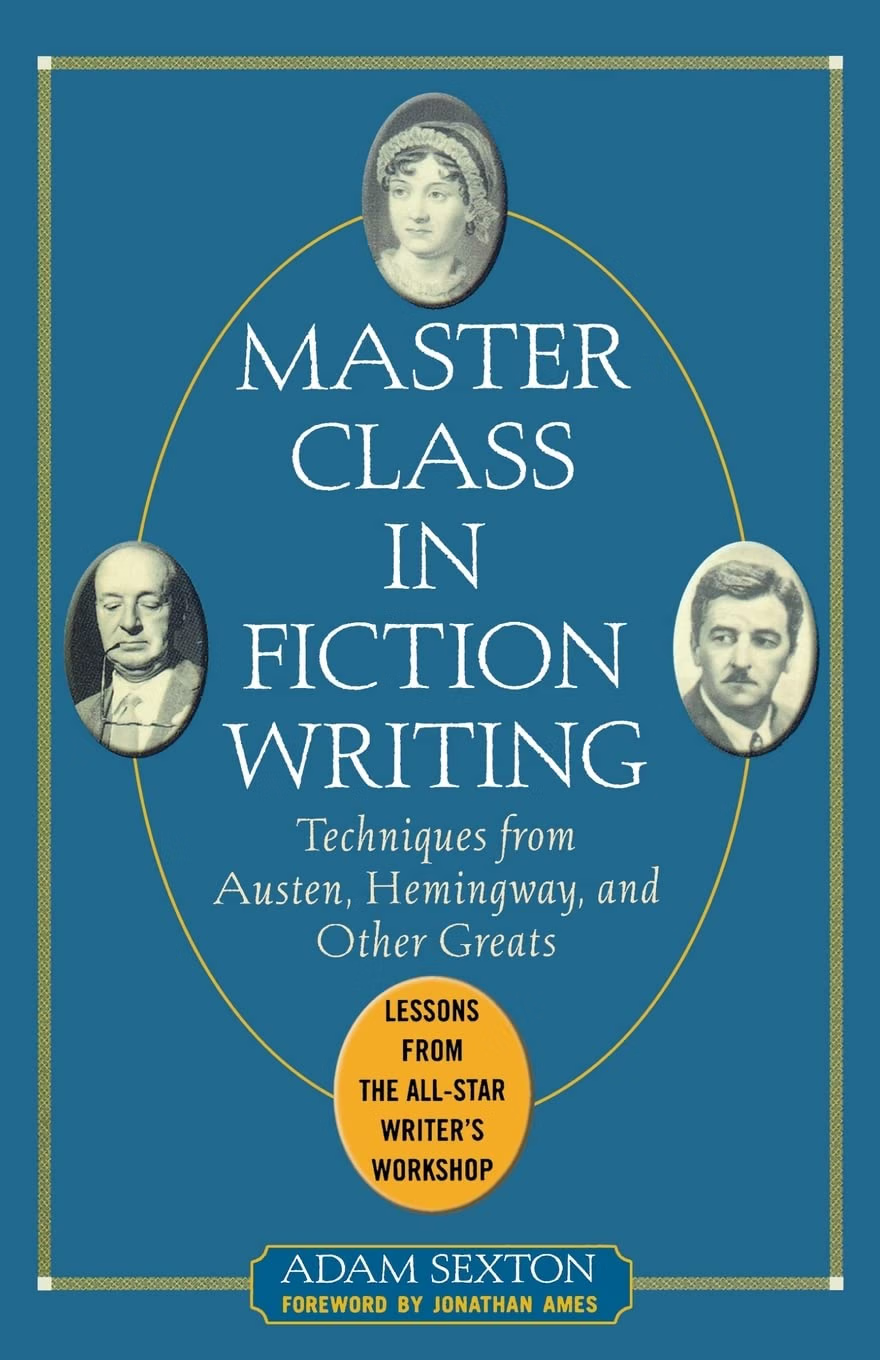
Book cover of 'Master Class in Fiction Writing' by Adam Sexton, featuring portraits of classic authors and text describing techniques from renowned writers.

2 – Master Class in Fiction Writing, by Adam Sexton. This book is also available online, I think for about $17. As the title would suggest, it’s like taking a course that walks you through all the elements of writing a book: a books structure, characters, plot, the use of description and dialogue, point of view, along with others and everything that goes into each. I went back to school for an MFA in Fiction. I learned a lot of what is discussed in this book along with an entry into a greater writing community as a result, but it was costly.

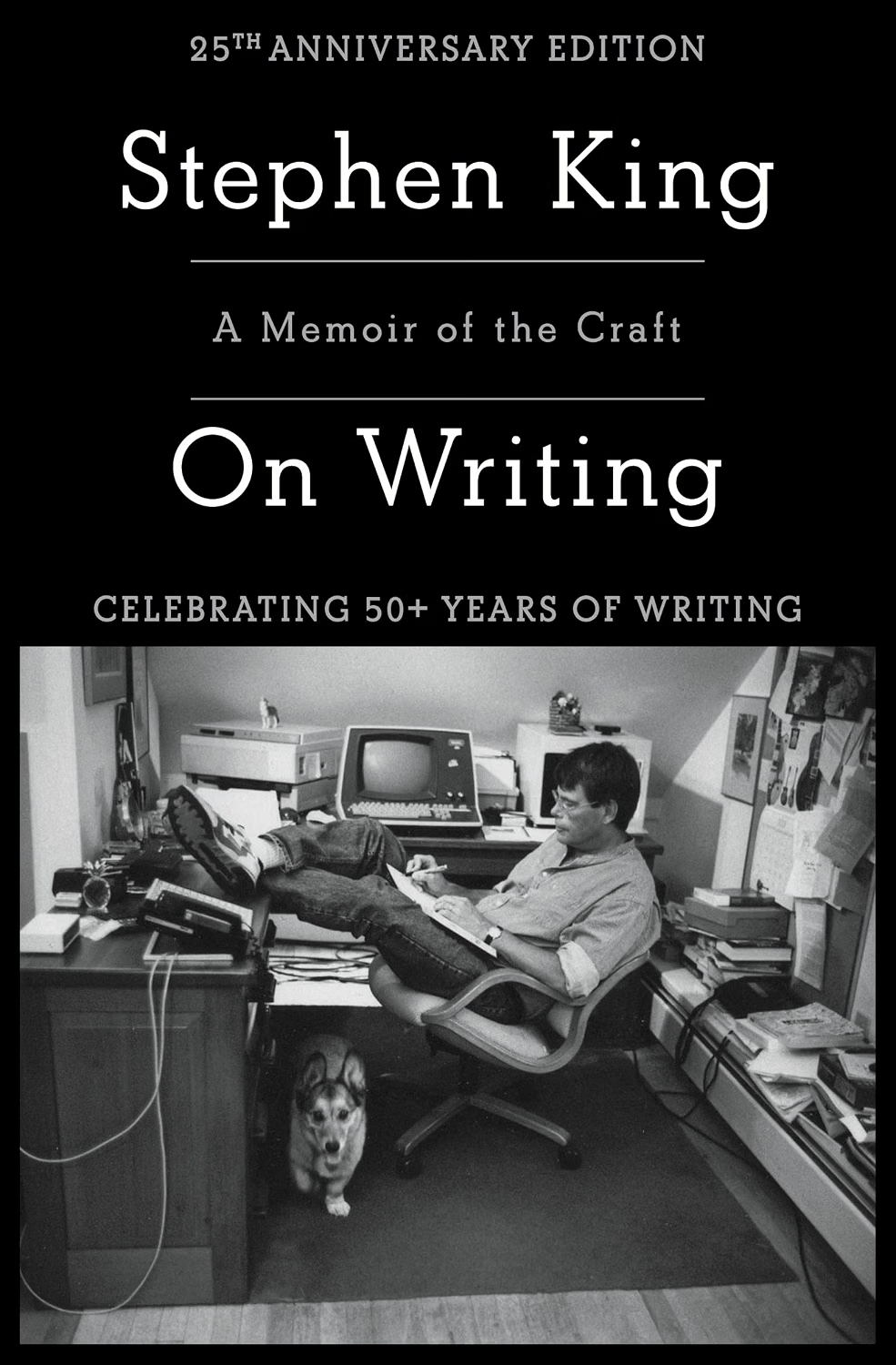
A black and white photograph of a man sitting in a chair with his feet on a desk, surrounded by books, a computer, and other writing tools, with a dog sitting beside him.

3 – On Writing – A Memoir Of The Craft, by Stephen King. It’s available online and often found alongside Mr. King’s other books. Yes, Stephen King is my all time favorite author, who wrote my all time favorite book – The Stand. Most love his writing and some don’t. Many think he’s just a writer who writes scary books, but he is SO MUCH MORE than that. He breathes life into characters like no one else. So, love him or not, his book is for every writer. It begins with his journey to becoming a best-selling author, but then freely offers some of the best advice and does not pull punches about what it takes and whether you’ll ever achieve the top tier of authorhood.

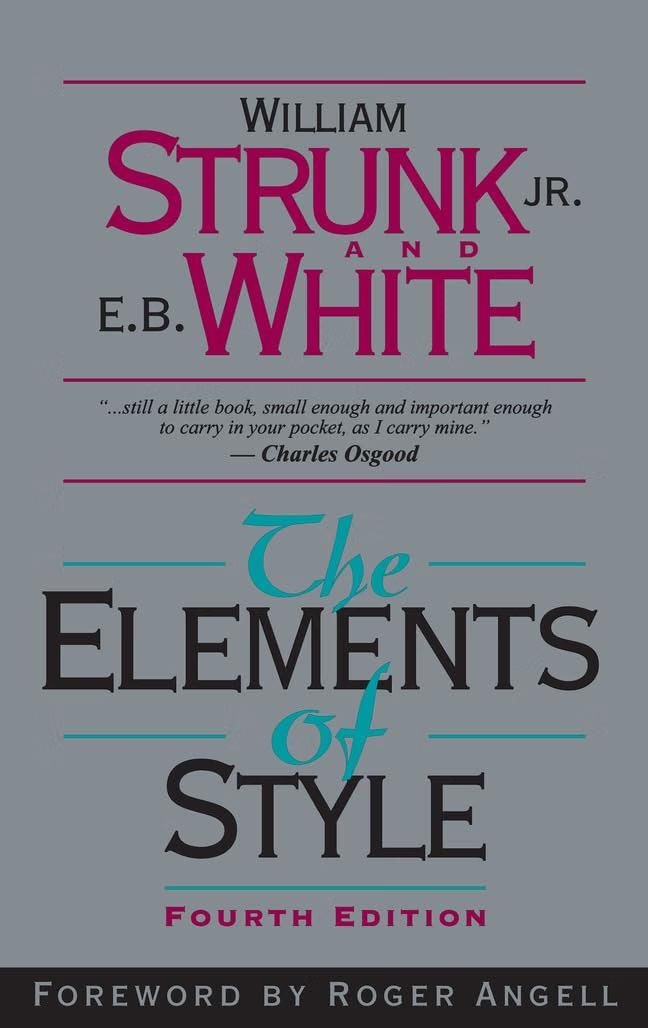
Cover of 'The Elements of Style' by William Strunk Jr. and E.B. White, featuring a quote by Charles Osgood and stating 'Fourth Edition'.

4 – The Elements of Style, by William Strunk Jr., E.B. White, and Roger Angell. It’s available online and most certainly in any good bookstore. If you’re like me, you’ve probably owned a copy since high school or college. I will simply say the book is invaluable. It first came out in 1918 and was commercially published in 1920. It’s been updated several times throughout its history. I owe my entire knowledge and understanding of punctuation to this little, 105 page book. Keep it on the side of your desk as you write.

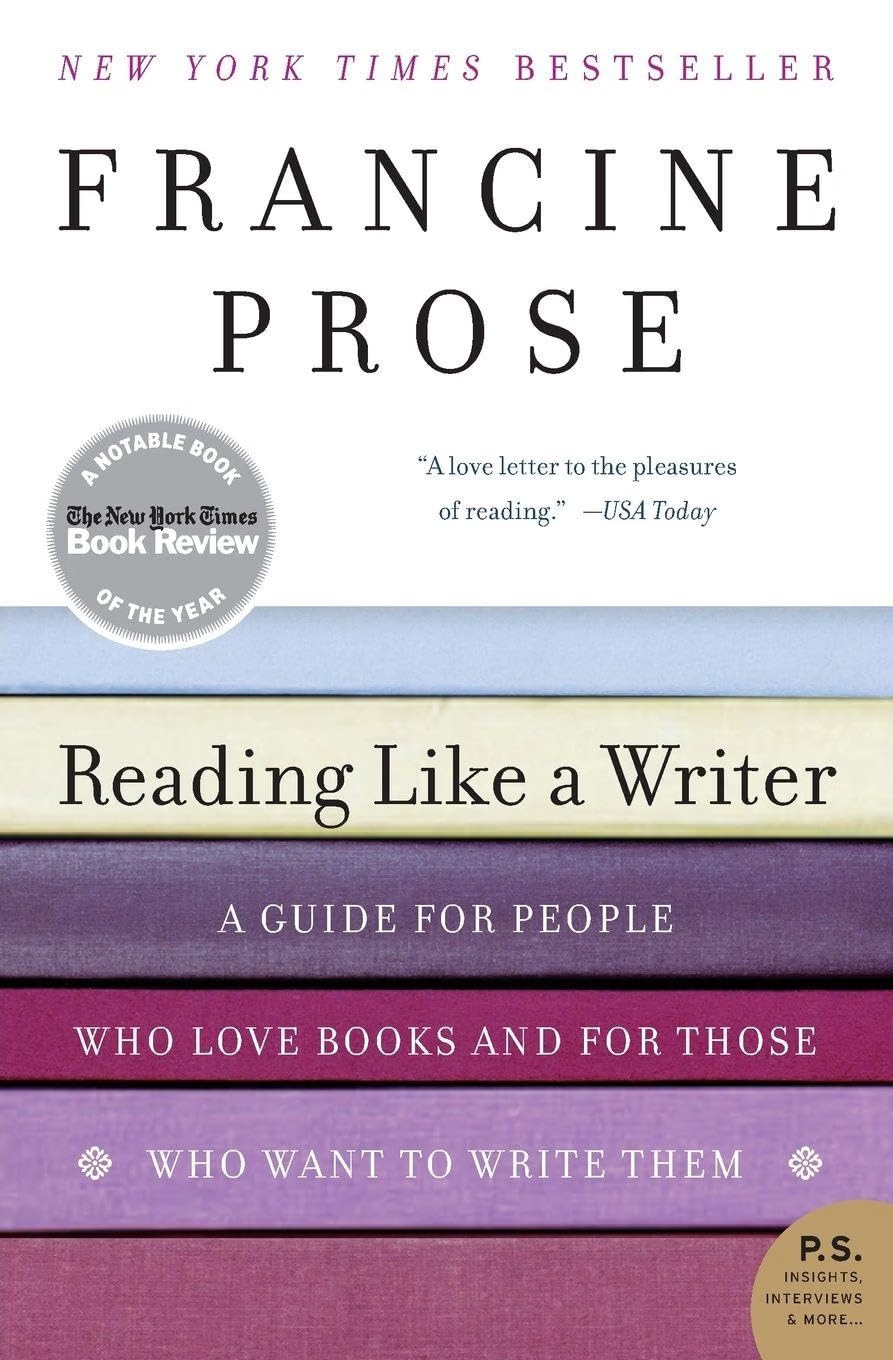
Cover of the book 'Reading Like a Writer' by Francine Prose, featuring a title and subtitle, along with a notable book badge from The New York Times.

5 – Reading like a Writer: A Guide for People Who Love Books and for Those Who Want to Write them, by Francine Prose. Available online for a little over $10. You cannot be a writer unless you are a reader. It would be like trying to learn a language without listening to others speak around you. There is a difference between reading a book for enjoyment and reading a book as a writer. Approaching a novel as a writer, you must learn how to understand what other writers have done and why it works. I joked in a post the other day about how writers “steal” from other writers. It’s not truly stealing, but I wasn’t kidding, learning how to absorb the tricks and techniques that others use successfully and then employing those lessons in your own writing will make you stronger. This is the book on how to do that. I can’t speak for all authors, but the only drawback for my having digested this book is that I’m much quicker to pick up on examples of poor writing with the books I read – books I would have happily consumed once upon a time with no judgement.

But that leads me to my final book on the list.

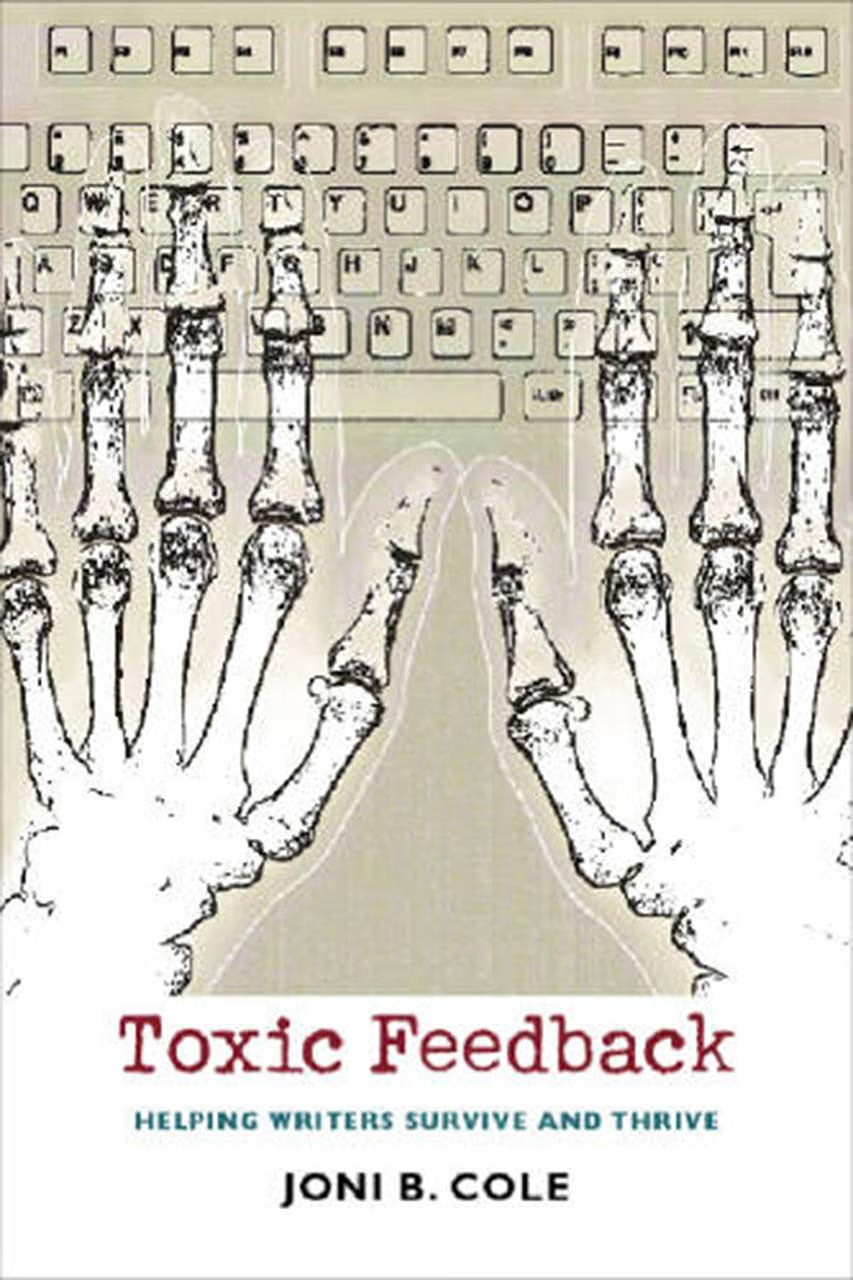
Cover of the book 'Toxic Feedback' by Joni B. Cole, featuring an illustration of skeletal hands over a keyboard, with the subtitle 'Helping Writers Survive and Thrive.'

6 – Toxic Feedback: Helping Writers Survive and Thrive, by Joni Cole. I don’t know if bookstores carry it, but it is available online for about $20. The first thing a writer needs to develop is a thick skin. You won’t survive without one. If you are still writing your first book, secretly hiding it on your computer and not having shared it yet, then the time will come, as it has come to us all, when your words will be read by others – and I’m not talking about a family member who will praise even cringe-worthy prose, just because…Someday, an editor or a beta reader or an agent is going to assess your work with all the honesty of a Marine drill sergeant. After your book is published, you’re going to get awful commentary from readers with 1 and 2 star postings. You must be prepared for that. It also means you need to know how to discuss other peoples writing in ways that offer legitimate, supportive advice and feedback. It is a critical skillset that needs to be acquired – from both directions – giving it and taking it.

So, for less than a hundred bucks you can arm yourself with some amazing advice and tools to help you polish your work to a higher standard. I hope you take a look at these and find them helpful.

Happy writing…

Give me a follow by clicking the blue button at the top right under the banner…
The Writing Environment – Pick What’s Best For You!

(A video version of this post can be found at: https://www.instagram.com/p/DdMz2ypBcxF/ )

There are a lot of jokes about what, where, and how writers write. I’ve heard that Stephen King works 24/7/365 and listens to loud music. I read that both Ernest Hemingway and Virginia Woolf stood in front of their elevated desks and Roald Dahl sat in a backyard shed. I like the shed idea. One of the writers I personally know does something similar up in New Hampshire and another takes a long, quite walk through the woods before settling down with a clear head.

Whatever the routine…and it’s different for everyone, the setting and the prep are crucial to getting words to pour out of their heads. It’s not as simple as sitting in front of a laptop and doing word crunches. Some of the jokes I mentioned is often of writers doing anything other than writing – they’ll clean the kitchen, do the laundry, toss a ball across the living room for the dog to fetch, write social media posts about writing instead of actually writing. Or we’ll just stare off into space looking like someone who’d just had a lobotomy.

I’m sure many writers are like me. Once the flow begins and you hit that zone where the outside world no longer exists because you’ve managed to achieve the Vulcan mind-meld with your characters, the slightest interruption – you’re wife telling you she’s going to the store or someone choosing that moment to call on your cell, even a TV playing in the background are sure to turn a mild-mannered Dr. Jekyll into a raging Mr. Hyde. AND, that slight hiccup will cost another 20 minutes before you get back to where you were.

Then there is the writing environment. Everyone has heard the cliché of the writer’s garret – the small space which occupies the top floor or the attic of someone’s house. I’d kill for one of those. I don’t know how some manage to create sitting in a Starbucks.

When I was writing my novel Alfheim, I rented a cubicle in The Writers Room – a space just off Broadway in lower Manhattan in New York City for some solitude, but for this book I needed mood enhancers. I didn’t have a quiet forest to clear my head, and I was dealing with fae creatures and elves who existed in a woodland realm. I was trying to conjure episodes of fairy magic and build a world that grew from Celtic mythology and settings.

Music and fantasy art took the place of a forest. My go to was Enya and Loreena McKennitt – from the opening bars of their music to the closing notes, pieces such as Enya’s May it Be or McKennitt’s The Mummers Dance and The Mystic’s Dream transported me instantly to the place where my characters were. And the visuals from a host of talented graphic artists displaying their work on DeviantArt.com helped me with the brushstrokes of my world-building.

For you fantasy writers, you don’t have to be a member of DeviantArt, just go to the site and hit the button for Fantasy and you can plunge down the rabbit hole of imagination from the sheer amount of talent out there.

And, I’ll let you in on a little secret. Writers are thievish. We don’t plagiarize, but we do steal…well, let’s just call it borrowing. We find things that work for other writers and artists and we “borrow” their “tech” and put our own spin on things. Think of it as the Sword of Gryffindor – it only takes in that which makes it stronger. It’s about creating a flavor.

If you have a notion of writing a story, I urge you to find the place and mood that puts you where you’re ready to set words on paper. If you are a writer share some of your techniques and go-to’s in the comments.

Happy reading…or writing…

Give me a follow by clicking the blue button at the top right under the banner…
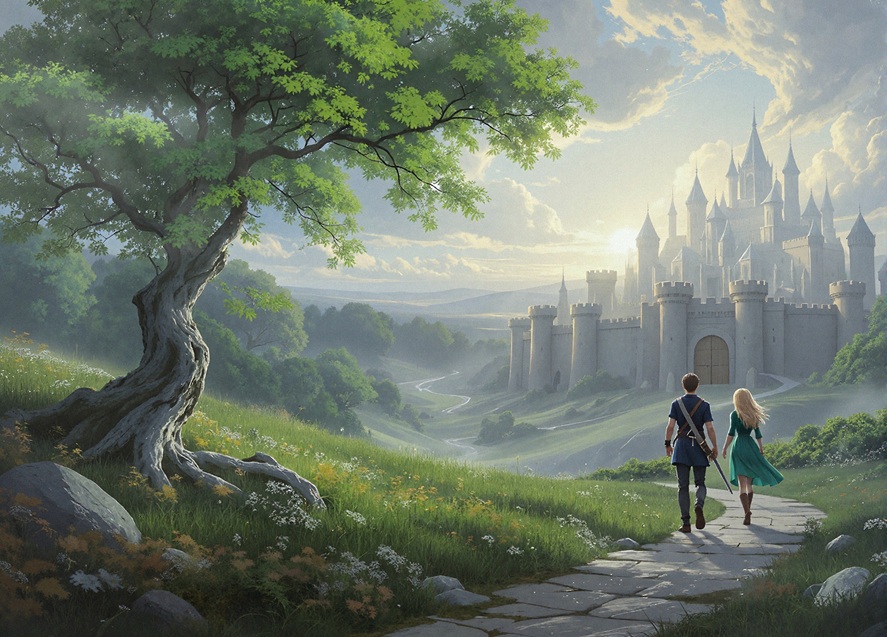
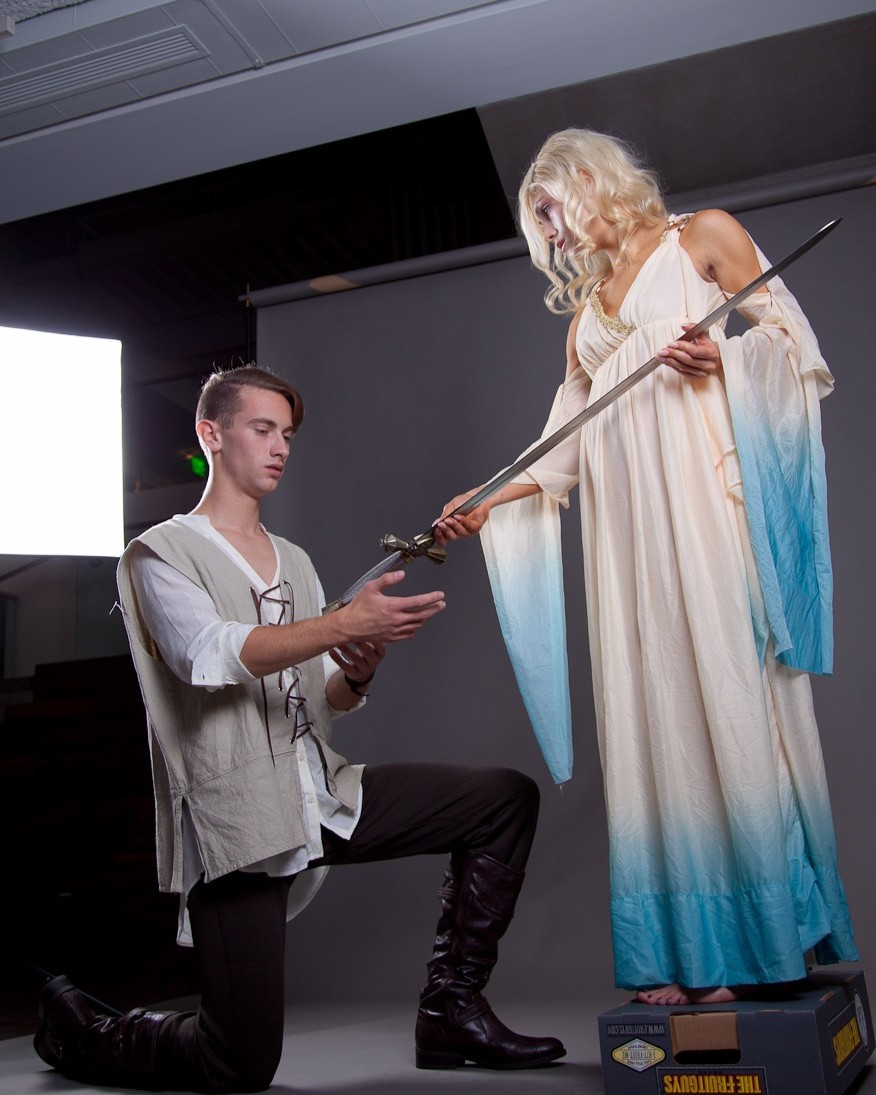
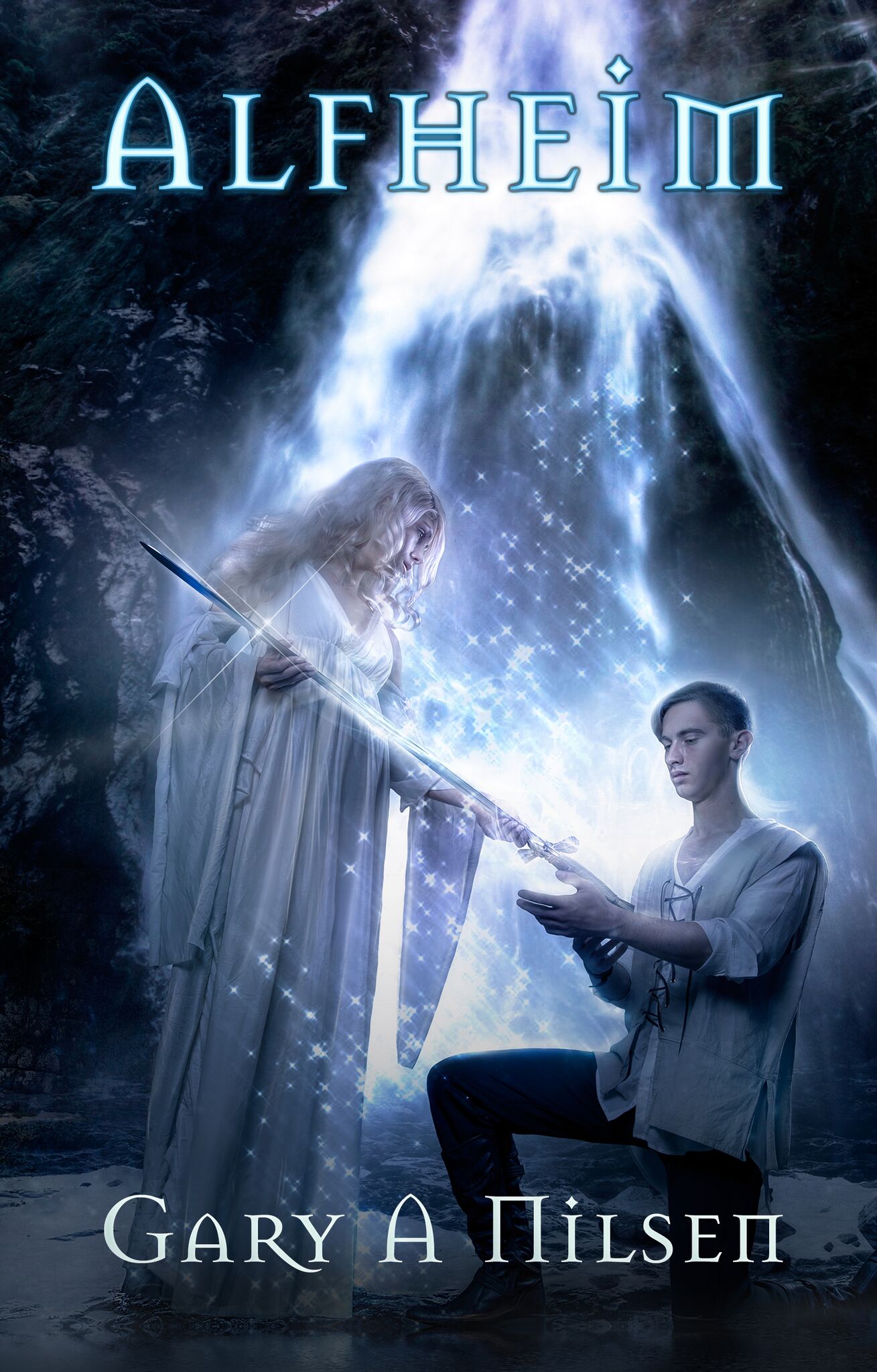
Producing a Book Cover – No AI Added

For my debut novel, Alfheim, I wanted control of my cover, so I decided to produce it myself. I don’t think AI was actually a choice back then, but this process felt organic, and I would choose it again – using professional artists to pull my ideas together. It can certainly be more costly, but I felt it was worth it in the end. The total cost at the time came to $1,400.

Give me a follow by clicking the blue button at the top right under the banner…
Sharing Marketing Results – Goodreads, Bookfunnel, & Substack

(A video version of this post can be found at: https://www.instagram.com/p/DcpI303PNVM/)

If you’ve published a book either through the self-publishing process or through a small, indy publisher, then you know how difficult it is to make your work discoverable given that Amazon publishes nearly 10,000 books a day. I still shake my head when I consider that number. Four million books a year. It used to be a rarity to find someone who had actually achieved the goal of writing one.

The sick thing is that on one hand it’s Amazon’s fault for creating a platform from which anyone can publish a book ten seconds after they write THE END, and yet they hold the largest market share for selling books. I’ve seen stats that claim Amazon accounts for nearly 70% of eBook sales and almost half of all print copies. It’s extremely frustrating for those of us who polish and polish our work, utilize developmental editors, line editors, and proofreaders before daring to expose our work to the world. It’s getting harder to distinguish the wheat from the chaff.

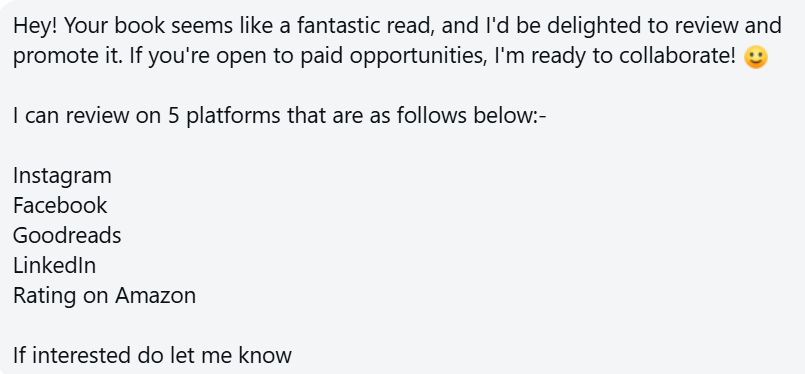
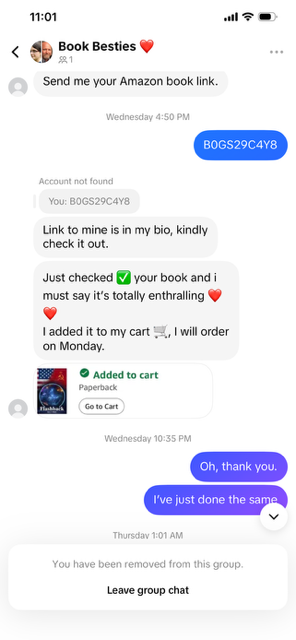
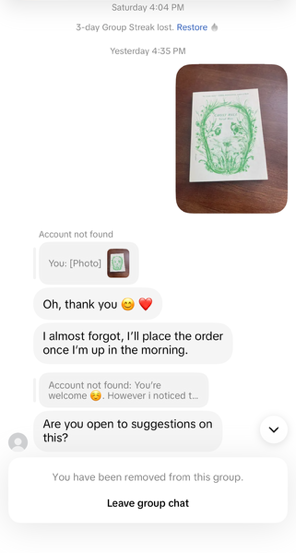
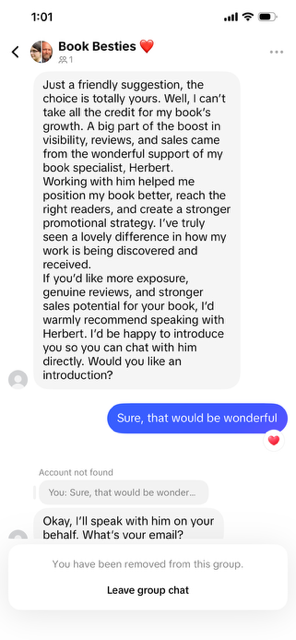
Your book is now out or about to be released; you figure the hard part is now complete, only to discover the challenge of marketing that book. It’s a labyrinthine nightmare. Building platforms with a website, Facebook, Instagram, TikTok/BookTok, Substack, YouTube all the while swatting away the scores of daily emails from scammers, each with a Gmail account offering to get you recognition and sales. Success requires trial and error using ads and boosting posts, doing promotions and giveaways.

Having said that, I thought I would share some results, or the lack thereof, with a couple of programs that I thought would pan out. I am truly curious to hear back from writers if they have had any measurable success with these.

First and foremost: Goodreads. I’ve maintained an author profile on Goodreads since 2011 when I timidly published my first short story. Then in 2016 my debut novel was published. I did a Goodreads Giveaway then and got some sales and some coveted reviews. Fast forward 10 years, after a writing hiatus, and two more of my books were published. I’ve always considered Goodreads as the go-to place for all things books, the place where readers and authors would connect. I created two campaigns, one for each book, giving away 10 copies of each in print format. I was super encouraged that each book had well over 3,000 requests for the Giveaway. Reviews had already started appearing on Amazon for each and my thinking was that these two campaigns would underwrite a sales drive once the winners were announced. Goodreads maintains that they suggest to each winner that a review would be welcomed by the author – indeed! In simple math, I thought that of 6,798 requests that weren’t winners might pursue obtaining a copy from either Amazon, Barnes & Noble, Books-a-Million, or even my own website store – not all, but maybe a small percentage. The actual result? Zero sales and one review. Looking back at my author dashboard, there are 5,642 people who have the books listed as “to-read” and yet only one person seems to be doing so.

Now I get not everyone will like every book every author writes, but both books were being received well – mostly four or five stars – with a couple of awards here and there. Scratching my head, I can only surmise that the Goodreads platform, as it is today, is filled with a number of readers who use the Giveaway program to get free books. If they don’t win, they just move on to any of the other thousands of books that become available. Whatever drove them to request a copy, whether they were drawn to the cover or to the blurb describing the book wasn’t sufficient for a call to action once the Giveaway ended.

Worse still was the feeling of having egg on my face for my response to the winners. For one book, the first in a new series, I sent the book with a bookmark and a thank you note.

The other book, since it was the second in a series, I went so far as to send a free copy of the print book along with the book they won just to enhance their reading experience.

The total cost for the two programs which included printing, mailing supplies, bookmarks, thank you cards, postage (rates to Canada are horrific), and the Goodreads fees (you have to pay for a Giveaway promotion) came to $741.76. Return on Investment? Zero. The disappointment is palpable.

Another attempt at marketing was opening accounts with Bookfunnel and Substack. Bookfunnel is a platform to help independent authors and small publishers in delivering eBooks and audiobooks to readers. First you create a universal book link for each eBook title you upload. From there you can engage in promotions of which there are two basic kinds: sales promos and newsletter promos. Promos for sale are created that might include specific genre references you can join. Newsletter promos are to help in establishing and building an email list by having someone get a free copy of your book in exchange for an email address. Each kind of promo requires an entrant to post their participation at least once by linking the promo in their newsletter or blog. Hence my new account at Substack, a well-regarded platform to send posts, podcasts, and videos to your subscribers. The email addresses from your Bookfunnel promo can be loaded into Substack to grow your audience. At first, I thought this was working well. My books were being downloaded from Bookfunnel, and I was gathering a subscriber list. On the sales promos, my books were averaging 4% of the promo clicks and nearly 12% of all the views. Even if there was a percentage of a percentage of viewers who went on to purchase a copy of the book(s), I would have been happy. Sales results? Zero. Frustration #1. Over to Substack. To date, of the 57 new subscribers from my Bookfunnel promos, 14 have pulled their email off the site – that’s 25%. Frustration #2. Thankfully Bookfunnel is pretty cheap. The Mid-list Author Monthly plan only costs $20 per month.

Once again, I can only conclude that many readers jump in looking for free copies and then disappear again. That’s 61 books given away instead of 61 book sold. AND, not one review.

You may think that I’m sharing this information like sour grapes, but that wouldn’t be accurate. My hope is to accomplish two things. First, my fellow writers should be aware of what some realistic expectations might be if they haven’t so far and if you have, again, I’d sincerely like to hear from you about your experiences with Goodreads, Bookfunnel, and Substack. Second, if you are a reader and buyer of books, then please take a moment to acknowledge the work that a writer puts into their creation by offering a review, especially on Amazon since their algorithms seem to respond to verified sales and reviews – and remember it doesn’t have to be a “good” review, just a review. Negative reviews are as valuable as good ones.

I’m not giving up. I will continue to explore the benefits, and there are others, with Bookfunnel and Substack.

Give me a follow by clicking the blue button at the top right under the banner…