Self-Publishing: An exercise in Math


pjimage

One of the first things an aspiring writer learns is that writing must come from passion and not from a desire to become rich and famous. That is an indisputable axiom, and one I wholeheartedly agree with. So, let’s set aside the rich and famous part – such notoriety goes to a tiny group of authors, anyway: Stephen King, JK Rowling, James Patterson, and perhaps a few dozen others. Instead, let’s focus on the financial realities that come with the decision to self-publish.

For the purpose of this post, I’m going to assume (rather boldly, I might add) that the writer has undertaken all the “must-do” steps of writing, re-drafting, editing, drafting some more, hiring a developmental editor, redrafting, hiring a line editor, corrections, and finally a proof-reader. Then of course, there is the cover art, the copyright, the ISBNs, the cost to prepare mobi, epub, and print ready files, and a publicist.

Okay, so now you’re ready to publish. Today, it’s pretty easy to do – that’s the good news. The bad news is that most of what you might earn is going to disappear into the profit margins of others in the process. If you’re willing only to upload your work in the form of eBooks to Amazon, Barnes & Noble, Kobo, and iTunes and leave it at that, your take home royalties will be palatable (possibly as much as 65% or 70% of the eBook price). However, that also means leaving money on the table. There is a very significant population of readers who still want to hold a book in their hands – you cannot ignore these readers, which means you must provide a way for them to get a physical copy of your book. This is where the choices you make become difficult.

Here are your options: Offset printing of your book, Amazon’s Createspace, and Ingramspark.

The choice to offset print means spending multiple thousands of dollars to have two or three thousand copies of your book printed. By way of example: my novel was 366 pages long, with a 5.5 x 8.5 trim size, trade paperback, and a glossy cover. The cost to print 2000 copies priced at $5,803 or $2.90 per book. This option is only cheaper when considering a larger volume of books. The inherent risk here is that if you fail to sell a major percentage of these printed copies, you will be out the money and will contend with finding a place to shelve them. Here is another truth: most debut writers will come nowhere near selling that many copies.

That leaves the choice to have your book produced via POD: Print on Demand.

Let’s start with Amazon. You already have your book listed with them for Kindle users. Their company, Createspace will take print ready files, produce your book by POD, and ship it out to a reader. They’re very efficient at doing this. Now, here’s the math. In my case, my novel was a young adult urban fantasy. A close audit of all new books in this genre dictated that the selling price of the book could not exceed $10.99.  A reader orders the book on Amazon, their commission is 40% or in this case $4.40. Createspace will charge $5.21 to POD your book. That leaves the self-published author $1.38. That’s 12.6% and not a bad thing.

An author can get a store like Barnes & Noble to list your book so that a shopper can have it ordered on BN.com or at the store where a bookseller will find it on their Bookmaster, in-store computer system. Typically, Barnes & Noble wants a 55% cut of your book. In my same scenario, that meant their commission was $6.04 per copy. Ingramspark, the company which produces the POD copies for Ingram Book Company (the company Barnes & Noble uses to order books for their customers) charges $6.30 per copy (Note: that’s 21% higher than Createspace. When I asked about this, I was told that it’s a business-to-business service and therefore they charge whatever they want). This means that for every copy you sell, you lose $1.35. The only way I was able to make it work when uploading my book to Ingramspark was to choose the “less advantageous” (for them, not for me) alternative of having Barnes & Noble take only 40% discount (meaning at the stores, customers have to pre-pay for the book) and allow for the book to be fully returnable. This altered the math such that each sale now produces a royalty of $0.29 per copy. Considering all the cost and years of hard work, this is distasteful. Please note the distinction of having a book marked “returnable”. You might have to place a deposit with Ingramspark to cover the cost of the returns and, also, Barnes and Noble will not typically stock POD books unless they are.

Now let’s wade into murkier waters and contemplate what many writers consider the ultimate for their book – to have it on the shelves of a bricks and mortar store like Barnes & Noble. An author can submit their book to Barnes & Noble’s Small Press Department for consideration of having it stocked in their distribution network. If they accept your book for shelving, you have to think hard about the inherent risks. As I mentioned earlier, to fulfill that order you will either have to have an offset printer produce the copies for delivery to the BN distribution centers or have Ingramspark produce them. I confirmed with Ingramspark that they would not allow for a volume-pricing discount if the order flows down from BN to Ingram Book Company to Ingramspark, they would charge you the same per copy price as if you were only ordering one book. Ingramspark will only offer a volume-pricing discount if you order the copies yourself and arrange for them to ship it to the BN distribution centers. The reduced price (which is still more expensive than an offset printer at that volume, in my case $3.50 vs $2.90) will allow you to sell the copies profitably at the BN desired discount of 55%, but it doesn’t end there. Barnes and Noble also wants the ability to return unsold copies of your book, which means you might inherit back a very substantial number of books and be out the printing cost. Books have, at most, a three-month shelf life at a Barnes and Noble store and often less if it isn’t selling. Shelves are routinely rotated for new titles. Also, consider that if you don’t have a very proactive promotion campaign drawing attention to your book, the likelihood of someone browsing at a BN store picking up and actually buying a copy of your book is a long shot.

When all is said and done, a writer must anticipate an investment of $15,000 to $20,000 if you want to go beyond simple epub and to present your book in a professional way. Writing is art; self-publishing is business.
How do you feel?

Be


Four words, a construct of social interplay designed to initiate an exchange between two people. It’s up there with Good morning, How’s it going, and Hey there. It’s a question asked and a question answered with equally uninformative phrases like: Doing good, not bad, or I’m okay. Many add the required: how about you, for which round two concludes in the same innocuous manner.

Such lackluster exchanges point to a deficiency in emphasis and genuineness. As a whole, we’re good at the former and not so much the latter. How do you feel? If you stop to consider the question, it’s not a greeting, but an invitation. If you apply emphasis on the last word, how do you FEEL, the asker is being genuine, as if they really want to know. It’s then incumbent on the askee to be honest. That’s usually where the bond crumbles. How often do you pose the question, just to break the ice in greeting, really hoping that you get one of the standard answers from the list? After all, who wants to be the recipient of someone capable of grabbing your ear for an hour on the subject? How often do you avoid the answer because you simply believe the other person is just being polite, or you don’t feel comfortable bearing your soul, or you simply haven’t taken inventory of the real answers? You could ask yourself the question to step away from being two-dimensional, but let’s face it; we’re not really adept at being honest with ourselves either.

There’s a reason therapists belabor their patients with this question. Feelings, something that humans try to usurp as being one of the hallmarks that set our species apart (a blatant fallacy) are what drive us. A feeling is the steering wheel that turns us in the direction of action. I suspect many of our actions derive from a superficial sense of feelings we haven’t adequately analyzed, for if we did, would we truly be racist, or homophobic, or hateful? How can we expect the world to behave better if we individually act from a perspective of inattentiveness to our own feelings? Feeling is the one tool that drives empathy, and empathy breeds tolerance and acceptance. To ignore feeling opens a channel to destruction and hate. If Omar Mateen had stopped to consider the intrinsic value of seeing two men kissing, that the simple expression of love was of far more worth than hate and murder, he would have been able to override the nonsensical and bombastic canon all religions foist on their followers and seen the truth of that moment. He would never have pulled the trigger.

We’ve become too used to spouting words devoid of genuineness. The other morning, watching news coverage on the Pulse Nightclub shootings, the anchor opened the stage to a local journalist on the scene. As the line of communications opened, the journalist began by saying, “Good Morning”. My only thought was, no, it’s really not. The journalist wasn’t trying to be insensitive; he was using a salutation that was simply polite, even though it was horribly inappropriate to the moment. It speaks to the notion that we do so many things by rote.

The element of global danger is escalating at the speed of sound. Many hear the nauseating rhetoric of Donald Trump (the man who would set our society firmly on a path to the dark ages) and react to his hateful invective because on the surface he offers a solution to the issues that strike at the heart of what angers us. He garners support on the principal of mob mentality. The polls suggest an uncomfortably titanic number of people are stupid enough to fall for it. News reports of death and devastation abound everywhere; the United States is not the only target and is frequently the aggressor of the same destruction we rally against. We emphasize our thoughts and reactions from the standpoint of anger and hatred, but fail to infuse our thinking with intelligence. We employ the inelegant methods of a club-wielding troll. We do need to act. We do need to consider how best to dial back the ability of those who seek to do harm. We do need to change the way the country operates. Politicians are, for the most part, useless individuals at best, malcontent enablers at worst. They refuse to act on issues based on truth, honesty, and necessity; instead, they tout party lines, willfully ignorant – to our detriment. Most frightening to consider is that our elected officials lack the essential aptitude needed to deepen the quality of our country. They stand in positions to serve with bought and paid-for elections and by the grace of great campaign managers. So, they serve the masters of finance and corporate greed selling out the American people like the good puppets they are. We stand by and let it happen, time and again. Vote they say. That’s all well and good, but when the offerings are as useless as deciding what flavor of yogurt to have for breakfast, there is little opportunity for any significant change. Never has there been a time when it was more important to close the distance between what we feel and how we act. Not six months or a year from now, but RIGHT NOW.

Dig in, ask your friends, your family, people you work with: how do you FEEL. When someone asks you the same question, think hard on it. Tunnel down and figure it out, then tell them. Your challenge is to find the best method of delivery to effect a change. I’m a writer, the only tool in my arsenal is written expression. You must find your own way; don’t shirk on this responsibility. The only rule of the game is to consider all sides. Test yourself by asking if what you feel really makes sense. There was a common theme of apathy in movies and media in the 1970s; it clearly lingers in the 2000s. Don’t fall prey to that. I don’t care, nor is it important who originally coined the axiom, but it bears repeating: “The only thing necessary for the triumph of evil is that good men do nothing”. I’ve said it before, there is no cure for what ails us as a whole; there is a rising tide of terminally evil people. Sprinkling your dose of honesty and well-considered feelings on an expanding web of well-thinking and well-meaning people might abate the disease long enough that cooler heads prevail as we search for the elusive, and likely unattainable goal of peace and understanding.

So, how do you feel?

Making magic…

This blog post was by the man who brought a first reunion of our MFA alumni together with some stellar help – Thank you Darren, Lori, and Kat for this incredible gift. As our captain and mentor, Merle Drown suggested, writers are able to continue writing new novels after the first one because the confidence that you’ll get it done is there. We now all have the confidence that we will have many more reunions to come as a result of this. Writing is magic, and getting back into the bubble was like a trip back to Hogwarts…

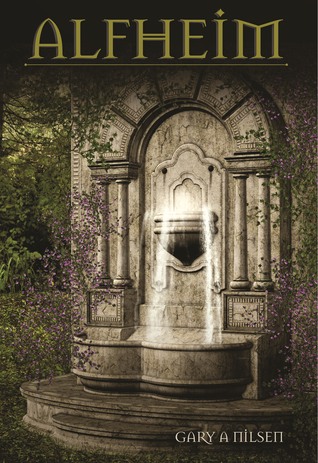
Alfheim – Gary Nilsen

When you write your heart out, to hear the kinds of things that this review says…well, that’s what it’s all about!!

mrsmamfa's avatarmrsmamfa

Alfheim

I was given the opportunity to read Alfheim before it was released and if I’m honest I was a little hesitant given my past experience with free eBooks. When I started reading Alfheim I had to swallow my fears and hesitations because it wasn’t long into the plot and I was hooked. Alfheim follows the story of Timothy, a seventeen year old student who is struggling after losing his mother. He has hardly any friends and a few bullies willing to make his life hell in and outside of school. Just as he gives up hope and contemplates suicide a fairy saves him from his mundane life and himself, introducing him to a world he never knew existed and one that depends on him.

I really loved this plot, it was like nothing I’d read before, I haven’t read many fairy based plots but this book has made me want…

View original post 326 more words