To AI Or Not To AI

For the sake of transparency, I’m a 70 year old accountant who is also a writer. My extended family includes a television and film star, a Hollywood camera man, and a nephew who is developing a company using AI technology. The discussion in our family is, therefore, ongoing.

AI, once a novelty is now ubiquitous. I see it at work, in Facebook and Instagram Reels, in memes, in short…everywhere. For someone my age, it’s not hard to remember a past without it. My first job as an accountant entailed a desk with a hardline phone and an adding machine with rows and columns of numbers and a hand crank to total the input. Back then, in the late 1970s, AI was science fiction. To be honest, so were cellphones (Star Trek), Apple watches (Dick Tracy), fax machines, and personal computers.

The promise of AI, as with all new technology, is to enhance our ability to do things more cheaply and efficiently. Computers revolutionized the handling of vast amounts of data effectively reducing the number of accountants and typists needed to run a business. Cellphones made it possible to connect with anyone at any time – gone are the days of being unreachable. Fax machines and later email short-circuited snail mail. There was a general movement toward instant gratification. Recently, in a meeting at my office, someone’s laptop used AI to record the meeting and then produced a written transcript of the meeting where voice recognition technology ascribed what was being said to who said it.

I’ve heard brilliant scientists suggest that the singularity event whereby artificial intelligence surpasses human intelligence and potentially eclipses human control is not as far off as one might think, possibly between 2026 and 2045.

As a creator, an artist, I try to limit my concern with AI as to how it affects people like me and those in my family. This morning, in the news, was the segment showing how Matthew McConaughey and Michael Caine are lending their voices to the developing technology being promoted by a company called 11ElevenLabs. AI will be used to transform and copy their voice for use in media – and not just theirs. This is tempting for someone like me who’d love to have one of my novels produced in audio format with a famous voice. Can you imagine how much it would cost to hire someone like them directly – even if you could get to them? Michael Caine said he’s not looking to replace voice actors but to amplify the voices of others – writers included.

Then of course there was the recent controversy over the AI actor, Tilly Norwood. I’m sure executives in the film industry are secretly drooling over the potential cost savings by not hiring flesh and blood actors.

In either scenario – AI voices or AI actors are sure to replace the real people who rely on those sources of income while others who perform AI magic will be making money. It might be the age-old transition requiring a society to adapt to more efficient methodologies and the shifts in income that result. My concern is that media producers using AI actors and writers who use it to help them write will not have earned the product of their profession. Stephen King once said you couldn’t be a great writer until you’d written at least a million words. Writers need to hone their craft by writing, actors need to hone their craft on stage or TV or movies. Film directors need to hone their craft working on ways to create a moment without relying on AI to do it for them. In short, AI is in many ways, a cheat. How many students have already been caught using the technology in completing assignments? AI is poised to dumb us all down. Maybe being more dumb will pair with the reduction in quality for something produced with far less effort. I’m not sure this will happen, but I can’t say it won’t.

My dilemma is whether to do my best in avoiding all forms of AI for the remainder of my time on Earth, or to selectively choose any part of it. I’ll admit to being torn, and I waffle between decisions. For example, I love the idea of book trailers – they’re like the previews at the movies – it’s a great way to develop interest in having someone buy a book. Most trailers I’ve seen are awful, there is no production quality. So, do I hook up with an AI tech to create of good trailer and forego the cost of hiring acting talent, finding filming locations, editing, and postproduction to create one? For the cover of my first Novel, Alfheim, I hired two actors and a professional photographer, bought props, and engaged a graphic artist to pull it all together. Today, with a tiny amount of effort, AI could produce that cover at a fraction of the cost.

So far, I’m leaning toward the avoidance of AI. But, as I’ve learned through many life lessons, principles are expensive. In the end, will anyone care?
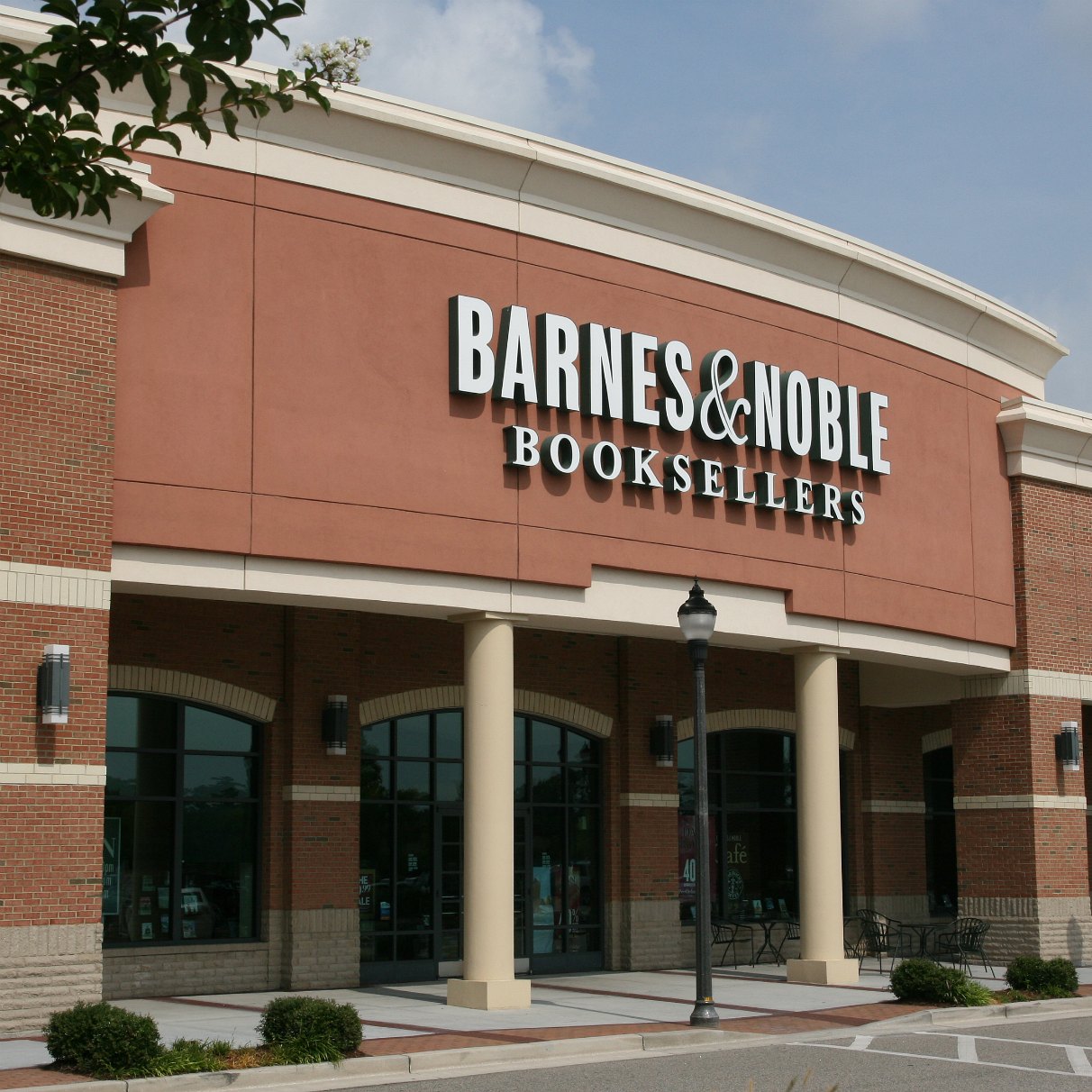
Barnes & Noble and the Writer: Friend or Foe?

Barnes-and-Noble-sq

Here’s a hint: they are not a writer’s friend. Walk into any Barnes & Noble and this might seem counter-intuitive given their very existence rests upon the backs of tens of thousands of writers – past, present, and future – whose works line the shelves of every store. As a company, Barnes and Noble does all in its power to cultivate a strong consumer/membership base. You can’t check out of the store without being quizzed about membership status. The recent trend is for staff to hawk a Barnes and Noble MasterCard as a means to build customer loyalty (the carrying cost of credit notwithstanding as compared to the free $25 gift card and 5% cash back). Their overall approach is to offer discounts (from 10% to 40%) off the retail price of books through risk-free acquisition of titles and demanding deep wholesale discounts from publishers in order to give it away to their customers.

It is especially painful for small indie presses and self-published authors. If the small press department is willing to stock the title, their terms generally require a 55% discount from the retail price, so if a trade paperback book (not the smaller dime store mass-market size) was to retail for $10.99, the publisher would get $4.95 to cover their profits, the cost of production and printing costs, the marketing and publicity costs, and a small amount as a royalty to the author after their agent withholds a fee of 15%. Barnes and Noble keeps $6.04, so they’re happy to start discounting to their customers – no sweat off their back. But it doesn’t end there. If after a few weeks, and rarely longer than three months, the title doesn’t sell, Barnes and Noble simply returns the unsold books to the publisher for a full refund – again, no sweat off their backs – the loss is absorbed by the publisher. This, in turn, makes it more difficult for a publishing house to stoke the fires of creativity as cash flow is diverted back to warehousing “unsuccessful” titles and is now unavailable for even modest advances to help struggling writers get their product to market. This is one of the reasons why POD (print on demand) books are becoming more and more common; it alleviates the need to devote large blocks of capital to pay for lower cost print runs for books that might only sell a few hundred copies at worst and a couple of thousand at best. As a policy, Barnes and Noble will not stock POD books. The best an indie press or self-published writer can hope for is to have the title made available for ordering through BN.com or via their in-store Bookmaster program should a customer happen to ask for it.

The problem is compounded in one additional way. If a customer orders a title that is by POD, the Barnes and Noble system passes the order to Ingram books (one of the two major book distribution companies) who in turn orders the book from Ingramspark, the company which actually does the printing. Ingramspark’s charge for printing a book is at least 21% higher than Amazon’s company, Createspace, to produce the exact same product (based on the identical print ready files) which further diminishes the compensation that might eventually trickle down to the author. In a recent analysis of a title from a small indie press, a young adult novel was priced at $10.99 – the upper limit for the majority of similar trade paperback offerings at Barnes and Noble. The 55% discount of $6.04 plus the printing cost from Ingramspark of $6.30 meant the net to the publisher was a negative $1.35 – a loss for each copy sold to Barnes and Noble. The publisher, who could not afford the alternative investment of $6,000 to produce 2,000 copies at a much lower per book cost that would most likely be returned anyway, was forced to offer the book at a discount rate of only 40%. The mathematics turned the sale profitable, but only to the extent that the publisher and the author would share a mere twenty-nine cents per book while Barnes and Noble gets to play with $4.40. The publisher/author is further penalized under this scenario by forcing a customer at the store to prepay the purchase should they wish to order a copy – not so with most all other titles on their system. It’s a stigma that leaves a poor taste in the customer’s mouth and nine times out of ten, the customer simply declines.

There is no lack of popularity for brick and mortar bookstores, eBook sales have leveled, and the attractiveness for holding a book in hand is as strong among customers as it ever was. It seems strange that Barnes and Noble fails to take the opportunity for championing the writers who feed its income-stream instead of penalizing them through extra profit-taking and posturing for their customers. As of this past Tuesday, the nascent CEO, Ron Boire, was released by the company’s board of directors as not being a “good fit.” Leonard Riggio, the businessman who purchased the company back in 1971 has taken back the reins for the time being. It can only be hoped that Mr. Riggio comes to recognize the value of the creative people whose efforts have lined his pockets for over four decades before the company is eclipsed by Amazon who offers much greater breathing room for writers.